Box in, box out, back to the front: Weflo becomes automated pit crew for war drones
The Korean startup is turning AI-based drone inspection and maintenance into a defense growth business, with new funding, a Poland deal and a push into the U.S. market.
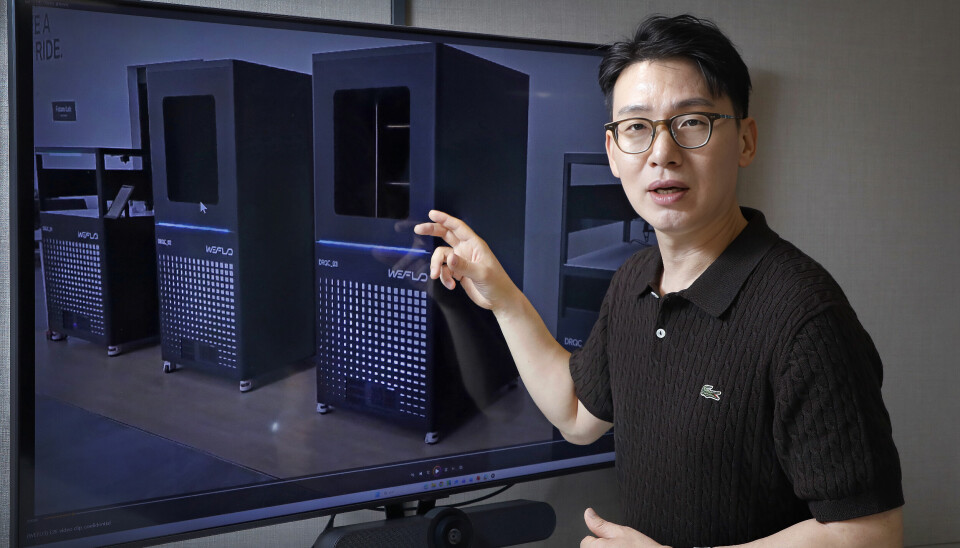
Weflo CEO Kim Yee-jung speaks during an interview with Korea JoongAng Daily at Jongno District, central Seoul, on June 2.PARK SANG-MOON
Unmanned drones occupied such a minor place on the battlefield just a decade ago that inspection equipment to evaluate their performance was virtually nonexistent, recalled Kim Yee-jung, who developed missile systems at Hanwha before founding his own company in 2022. But after the Russian invasion of Ukraine and the Iran war, drone deployment became a key focus and changed dramatically, creating opportunities for drone testing companies such as Weflo.
Weflo builds AI-based, noncontact diagnostic systems that inspect drones and other electric aircraft for faults that bring them down, such as failing motors, degraded batteries and structural fatigue. As militaries from Seoul to Warsaw race to field drones as frontline weapons, that overlooked step — keeping them airworthy — is turning into Weflo’s opening into the market.
Related Article
Spun off from Hanwha Systems and named a CES 2025 Innovation Award honoree, the company announced in April that it closed a 5.5 billion won ($3.6 million) Series A, bringing cumulative funding to 11.8 billion won. It also recently completed an Army combat experiment with the donebot combat system and signed its first international deal: a maintenance memorandum of understanding with Poland’s WB Electronics.
In an interview, Kim explained why the global defense industry ended up calling his company rather than the other way around.
The following interview has been edited for length and clarity.
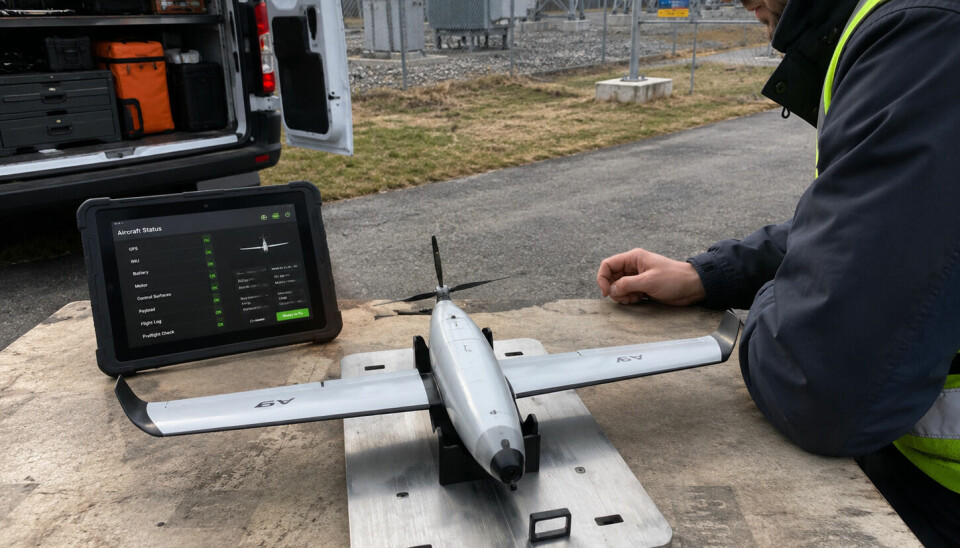
The portable verti-Pit X Mini automatically performs preflight aircraft status checks before drone operations.WEFLO
Q. Drones are rewriting how wars are fought, but you have argued that the hard part is not building them; it is keeping them flying. How did you come to that?
GoogleAdmanager-KJD
A. At Hanwha, I built missile systems, and every munition and missile comes with its respective inspection equipment. You always inspect a weapon before launch, and that is a basic element of defense. But drones didn’t have that. People treated them as cheap, disposable, single-use. But even single-use munitions get inspected, because if they fail, they can cause friendly-fire casualties. That is actually the biggest reason that I started the company. I figured drones would eventually need the same oversight.
You have to maintain drones for them to stay operable, and proving that in a real military environment was the purpose of last year’s Army combat experiment with the dronebot combat system, under the Army Training & Doctrine Command.
That work has already pulled in foreign militaries, including a maintenance deal with Poland’s WB Electronics. How did a Korean startup end up there?
We supply militaries in one of two ways. When they win a drone program, we provide them with a prime contractor, such as Poongsan or LIG D&A. Or we list lighter versions of our equipment on the Public Procurement Service, allowing individual units to buy them.
The Poland case grew out of the dronebot combat experiment. WB’s drones had been delivered to Korea earlier without any maintenance support, and the military asked us to build equipment to inspect them. WB heard about the request, came to see our Jeonju site and realized that we cover an entire maintenance, repair and overhaul (MRO) process, not just a single device.
European rules require a drone MRO hub roughly every 200 kilometers (124.3 miles), so the MOU is about replicating the maintenance-hub model that we built in Jeonju in Poland. In a way, we never pitched our equipment to Poland. News of its performance spread through the military, and the request came from their side.
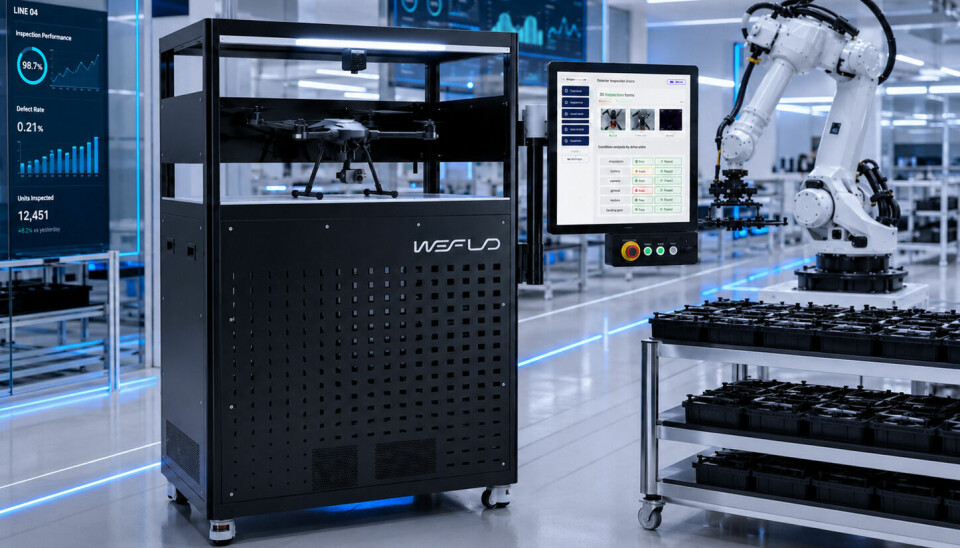
The verti-Pit QC automatically conducts quality inspections during large-scale production at the end-of-line stage of drone manufacturing.WEFLO
In this kind of drone warfare, attack drones are meant to be expended, while reconnaissance drones are flown again and again. Where does maintenance fit?
The military’s drone program is split into two. There are attack drones, which replace missiles and strike, and then there are surveillance and reconnaissance drones. Attack drones are cheap and bought in bulk, so people assume that they don’t need maintenance. But they carry a warhead, and if one launches incorrectly and flies backward — or simply crashes — they can be dangerous. They still need regular and periodic inspection to be stored and fired safely.
Reconnaissance drones are the opposite. They are expensive and meant to be reused, so they already carry some self-inspection capability. Even then, their periodic and precision checks require dedicated equipment, and there is a limit to how many times an airframe can be sent back out before someone has to verify that it is still working soundly.
Either way, we go in as part of the package. When a large order arrives, it does so as a set — some number of drones and some number of inspection units — and that is where we are deployed. In the field, the real constraint is not flying a drone once but keeping a fleet mission-ready, which is a maintenance problem before it is a hardware one.
You just closed a Series A and are moving upstream into manufacturing. Why, and who needs it most?
Until now, we focused on the operations and maintenance stage, or in automotive terms, the service center at the very end of the chain. From this round, we moved upstream into manufacturing. If you visit Korean drone makers’ production lines, whether the company is large or small, they basically only have a screwdriver and a few other tools. We built an automated, intelligent quality-inspection line: You pass a unit through a few stations, and its quality is verified.
Airframe makers needed the manufacturing-stage product even more than the operations-stage one, because defense means volume. You cannot inspect 100 or 1,000 units by hand and by eye. We focused on the civilian market until about two years ago; however, small operators tend to repair drones themselves, and public bodies that own fleets, such as the road corporation or power utility, would rather not repair them at all. Then the defense industry took off so suddenly that this is where we had to look first.
Weflo CEO Kim Yee-jung speaks during an interview with Korea JoongAng Daily at Jongno District, central Seoul, on June 2.PARK SANG-MOON
Where does Weflo go from here, including in the United States?
From mid-June through July, we are running a technology road show, aimed at global defense unmanned aerial vehicle manufacturers and major drone companies in the United States. We have already contacted key potential customers there. We will demonstrate our AI-based drone diagnostic and inspection solutions in person, then talk through where we can collaborate, from quality-inspection automation to a “dark factory” (fully automated factory), preflight inspection equipment and ways to improve operational stability.
The system that we are unveiling is a dark-factory transition solution, built for the mass production of defense drones. It gathers many kinds of physical data from the airframe without contact and uses AI to automatically judge whether a unit is faulty. It is not tied to a single airframe or production line; it is modular, so we fit it to a customer’s process and drone type and set it up on their line in as little as two weeks. As defense makers move to unmanned, automated lines, that is how you simultaneously widen the quality-inspection bottleneck and increase output and reliability.